Last Monday I experienced my first real moment when I knew that I was helping an IHAD student with more than just their homework. I know, the semester was almost over, and maybe it sounds bad that I only had one, but I don't know if the average person gets to see the impact of their volunteering actions very often, so this was a big deal for me. I'd just finished up with working on the FOIL method- first, outside, inside, last- god I hate math with a 7th grade girl. Normally this is the point when I start small talk for a few minutes before they say, "Thank you for your help today" and either go upstairs to play games or start on their way home. Instead, the girl asked me, "You go to college right?" I told her I did, that I went to UNC Asheville that was just a few minutes down the road. She mulled that information over and then leaned in closer like she had a deep dark confession to make.
She all-but whispered to me that she felt bad because she didn't really want to go to college. She said all of her IHAD friends wanted to, and she knew she was supposed to want to since that was the point of all of the tutoring she'd had. I have to admit, this threw me for a loop. Why would she not want to go to college? It would be free, she would make her parents proud, and she'd probably be way more financially successful in the future. Being careful to keep my face blank, I asked her why she didn't want to go to college.
"It's dumb, " she told me, "but I would rather be a fashion designer." She went on to tell me her mother and her always bonded over making her clothes together, and though she never felt happy taking tests or memorizing facts, she loved every minute of designing and making clothes.
"Then that's what you should do," I told her. And for the first time, I realize how true that is. Just because the traditional college route is available to her doesn't mean that college is her best option. Yes, when i think of success I measure it in how much money a person makes, the stability in their life, and whether they have a family and a home. However, maybe I can use that measurement for my life, but I can't apply that standard to everyone when determining success. I found a college major I loved, and am pursuing a career that pays well and is so enjoyable that it could not be any more perfect for me. Perhaps not everyone would feel that way about working for a marketing firm, but I'm excited. It just so happens that the career I've always wanted to do involved attending college.
We talked for a while about the fact that several schools do offer fashion design courses, and even majors, but I emphasized the fact that college is not a necessary factor for a happy life. I assured her she shouldn't feel guilty for being in IHAD with no plans for college. IHAD's mission is to motivate and empower children from low-income communities to reach their education and career goals by providing a long-term program of mentoring, tutoring and enrichment and tuition assistance for higher education.
If her goals and dreams don't involve college, that's fine. IHAD just gives her the opportunities she needs to find out what she wants to do. Support from her community, IHAD volunteers, parents and teachers should all be working together to make sure she knows her dreams are valid, and it is not a waste of anyone's time to help her achieve those dreams. In fact, she has been done an injustice if no one in her community or school ever told her that her dream was worthwhile. Schools and afterschool programs could look for ways to integrate creative learning and offer alternative courses so that they can give her many opportunities to achieve her dream. Facts and numbers for standardized tests aren't what are going to make all children feel successful and happy.
Our conversation was my best IHAD volunteer moment. I felt like an actual role model, not because I was a college student, but because I was a person who had gone through her age and the insecurities that go with it, was young enough to remember, and was able to reassure her that she should keep doing things she should enjoy. When our conversation was over she was smiling again and looked extremely relieved. She could open up to me and trusted what I had to tell her. That was the first time in quite a while I've felt like I was needed and helpful when I volunteered.
Our conversation wasn't only filled with new ideas for her. It helped me realize that I have some inbred stereotypes I didn't even know about telling me what constitutes "success" and what avenues one should take to get there. It took reassuring a middle schooler that her dream was just as important as any doctor's, and not a waste of anyone's time, before I, a 22-year-old could come to that same realization myself.
It might have taken me a while, but this semester's IHAD volunteering has opened me up to new ideas on education, success, race and class. I was not only impacted, but hopefully impacted the lives of others as well. My IHAD volunteering and class discussions have been, for me, the true definition of success.
Tuesday, April 24, 2012

Tuesday, April 10, 2012
Hurricane Katrina seemed to awake America to the relationship between climate change and social justice. Katrina, fueled by the warm Gulf, devastated mainly black and low-income populations that couldn't avoid harm's way. It should be understood that environmental justice crises are happening across the world in developing countries, with much more extreme effects than in poorer areas of the US, but for the sake of this class, I am sticking specifically to environmental justice as it pertains to the US.
Here in Asheville, we rarely have hurricanes, but climate change will still negatively impact low-income and minority populations disproportionately. We are not exempt from the "climate justice" issue. In the South, climate change is expected to bring us more extreme summer heat waves and winter floods. Human health implications include heat-related illness and mortality, mold-triggered respiratory ailments and possibly increased West Nile virus. According to the US Environmental Protection Agency, hotter temperatures likely will increase urban smog levels and rural wildfires, triggering asthma attacks in those areas. Low-income and minority populations will bear the brunt of those human health consequences, mainly because they tend to have limited access to health insurance. The video below shows how Camden, NJ residents are affected by the pollution caused by neighboring cities, a case study of a phenomena that is happening in poorer and minority areas all around our country.
Heat waves are of particular concern to low-income and minority residents, who tend to lack air-conditioning, live in higher crime areas (where doors and windows remain closed for security reasons, cutting air circulation) and congregate in highly urbanized neighborhoods (where temperatures usually exceed surrounding areas because of the "urban heat island" effect). One study by the Congressional Black Caucus Foundation showed that under extreme heat wave situations black populations were twice as likely as white populations to die from the heat wave.
But at least summer heat waves are predictable. Floods and wildfires are not. Unfortunately, low-income populations are less mobile, often lack access to warning systems (like the Internet) or don't understand English warnings, making them more susceptible to catastrophe. Low-income populations also tend to lack adequate property or homeowners insurance, making wildfire and flood damage that much more devastating. As proved in Katrina, poor communities don't have the resources necessary to bounce back from natural disasters.
Another environmental issue affecting poorer citizens is climate change. It could cause price increases for various necessities. In the summer, shrinking water supply combined with higher water demand (residential and agricultural) could increase summer water rates. Electricity rates could go up, as we are highly dependent on hydropower for electricity. Food prices could increase as irrigation costs rise and farms suffer global warming-induced drought, wildfire and pest damage. All those scenarios will have a disproportionate impact on low-income populations.
The ironic part about climate justice is this: Low-income populations are hit the hardest by climate change, yet they contribute the least to climate change on a per-capita basis. Lower-income populations generally have smaller carbon footprints than higher-income populations as they (usually) buy fewer goods, own smaller homes and drive and fly fewer miles. A recent Congressional Black Caucus Foundation study showed that black populations nationwide contributed about 20 percent less in carbon-dioxide emissions per-capita than white populations. How has this escaped the public's notice? I watch and read the news regularly and haven't heard of even one story that suggested issues like environmental justice were on the media's agenda as issues that needed salience.
The problem for this issue, as well as every single other issue I've blogged about this semester, is that there is no easy fix. Added onto that, there isn't even a feasible solution for anytime in the near future. There are articles galore on how wrong it is that minorities and poor are suffering from higher pollution and toxicity levels than the more well-off citizens, but nobody seems to be able to come up with a working solution. The best plan I could find is called the Plan EJ 2012, and is recommended by the United State's Environmental Protection Agency. A verrrry long summary of their plan can be found here http://www.epa.gov/environmentaljustice/resources/policy/plan-ej-2014/plan-ej-overview.pdf.
Again, plans like this are not likely to take any serious root or effect without funding and support by both the media and the public's agendas. Since this issue does not seem to be as pressing to many people as issues such as poverty, education, stopping violence, etc. plans to stop pollution of areas that mainstream society does not even has to see, I am hesitant to believe any changes will happen soon. I fear this issue is going to have to get much much worse before it gets any mainstream attention.
The problem for this issue, as well as every single other issue I've blogged about this semester, is that there is no easy fix. Added onto that, there isn't even a feasible solution for anytime in the near future. There are articles galore on how wrong it is that minorities and poor are suffering from higher pollution and toxicity levels than the more well-off citizens, but nobody seems to be able to come up with a working solution. The best plan I could find is called the Plan EJ 2012, and is recommended by the United State's Environmental Protection Agency. A verrrry long summary of their plan can be found here http://www.epa.gov/environmentaljustice/resources/policy/plan-ej-2014/plan-ej-overview.pdf.
Again, plans like this are not likely to take any serious root or effect without funding and support by both the media and the public's agendas. Since this issue does not seem to be as pressing to many people as issues such as poverty, education, stopping violence, etc. plans to stop pollution of areas that mainstream society does not even has to see, I am hesitant to believe any changes will happen soon. I fear this issue is going to have to get much much worse before it gets any mainstream attention.
Sunday, April 1, 2012
Mass Incarceration: How to spend taxpayers money and ruin the labor market all at the same time.
Devah Pager’s book Marked: Race, Crime, and Finding Work in an Era of Mass Incarceration researches the effects of mass incarceration and the consequences of having a criminal record in today's American labor market. Through her research conducted in Milwaukee, Pager demonstrates that the probability of ex-offenders obtaining legitimate work is extremely low. And when one factors race into this equation, the chances are even more improbable. Not a good sign for the 2 million currently incarcerated people looking to one day rejoin the labor market.
The findings in Pager’s book highlight the continuing significance of race in employment decisions. The interaction between race and criminal record suggests that black ex-offenders face an intensification of stigma above and beyond the simple negative effects of either race or criminal record alone. Already burdened by a disproportionate representation in prison, blacks carry the added weight of compounding stigma. The combination of race and criminal record creates barriers to employment that in many contexts appear almost impossible to overcome.
Throughout this semester I've been amazed at just how prevalent race is in every social situation. Class, privilege, incarceration, school funding, income level, self-fulfilling education prophecies, types of parenting styles, etc. I've looked back at my blogs from throughout the semester and there is not one aspect of society I've covered that it is not touched by race and privileging the majority. Not one. To me, this class is a clear indicator and a wake-up-call to tell me that racism is not by any means conquered or dead. In the video below, it is apparent that many people believe America is now a "post racial" country, since Obama is president. Maybe equality is closer for the public, but as far as individual, specific rights for all people from different races, we still have a ways to go.
Pager’s analysis suggests that blacks with no criminal record had about the same chance as white ex-offenders just out of prison. Therefore, many offenders (of both races) end up living in poverty or are compelled to return to crime if they can't find a more legitimate job.
In the United States, more than 2 million individuals are currently incarcerated, with an additional 4.9 million individuals under criminal justice supervision through probation and parole. The rhetoric of neoliberalism has rejected any understanding of crime as an effect of poverty and social circumstances- replacing it with what Pager calls the “formalization of moral order’”. This must be ignorance on our part, to not take into consideration that life circumstances, such as poor education and lack of community support, played a part in putting some of those 2 million men and women in jail. We are at fault as a nation for some of those individuals' incarcerations. If more of our tax dollars were going to give them the right support while they're being educated in under-funded schools and lower social classes, we could save the money we spend keeping them housed, clothed and fed in jail.

Pager also identifies three elements that foster inequality in employment for ex-offenders: 1) selection effects assumes that employment difficulties pre-exist incarceration and that they don't want to work; 2) transformation contends that the experience of incarceration alters an individual in ways that prevent them from entering the labour market; and 3) the stigma of incarceration amounts to a form of negative credentialing in a credential society, which poses barriers to employment.
The finding that ex-offenders are one-half to two-thirds as likely as equally qualified non-offenders to be considered by employers is evidence of the barriers to employment imposed by a criminal record. Like a GED or an occupational license, the negative credential of a criminal record provides an official marker of status and suitability for employment that can be used as an easy screening mechanism by employers. Currently, most employees are allowed to ask if job interviewees have ever been incarcerated. And convicted criminals are not a protected class in anti-discrimination cases. Pager’s study also finds that black ex-offenders may be doubly disadvantaged.
The implications of Pager’s study suggest that a large and growing population of ex-offenders is unable to secure even the most basic kinds of low-wage work, such as construction, yard and house work. With incarceration rates increasing exponentially and more than 650,000 ex-offenders returning from prison each year, the existing problems of prisoner re-entry into the work force will likely amplify with time.
The social costs of high unemployment among this group – along with the additional burdens to families, communities, and public agencies – are cause for serious public concern. Although, it is unreasonable to assume that employers will hire ex-offenders solely in the interests of the public good. If there isn't a law requiring them to hire ex-convicts or banning them from asking about criminal backgrounds, they'll probably be drawn to hiring people with clean records, who won't be as big of a threat for the cost of theft and potential liability for harm to their customers from their employees. Market forces alone are clearly insufficient to manage the problems of prisoner re-entry.
After a class discussion I believe that the basic premise of Pager’s work, that a criminal record hinders labor market opportunities, is not in itself a new idea. What is new about her research is its linkage to the trend towards mass incarceration. Pager’s book is a scathing critique of ‘crime control’ policies, starting in 1970 with Nixon's war on crime, that contribute to a cycle of criminal involvement and victimization, and diminishes the very idea of the criminal justice system's effectiveness. Ultimately mass incarceration, without even looking at its racial inequalities, harms everyone, due to its effects on the labor market and the economy.
Saturday, March 31, 2012
Unequal childhoods: In case being a kid isn't hard enough
In "Unequal Childhoods", Annette Lareau tried, like many other authors, to capture the texture of inequality in America. Unlike many of the other books and movies I've covered over the course of my semester, Lareu's findings are not racially driven. Instead, she describes how child-rearing techniques in upper-middle-class homes differ from those in working-class and poor homes, and what this means for the prospects of the kids inside each type of home life. To her, class is more important than race, even though the white race tended to be more privileged to be in the middle class. Lareau dispels the theories that society is fundamentally open (ex. the American dream) or that disparities exist in America but can have different "degrees of difference". She states that class always matters. Period.
For me, her book's most meaningful point point is you can't claim that good parents raise successful kids and bad parents raise unsuccessful ones. For children, reality is much more complicated than that cut-and-dried philosophy.
Looking at upper-middle-class homes, Lareau describes a parenting style that many of the student's in my college honors class claimed to be brought up it. This style is called concerted cultivation. It involves enrolling kids in vast numbers of adult-supervised activities and driving them from place to place. Parents are deeply involved in all aspects of their children's lives, from social activies to sports and classwork assignments. They make "concerted efforts" to provide learning experiences in every situation that arises, and rarely leave children to their own devices. Now, this method of "helicopter parenting" works great for me with my puppy, who has a bladder the size of a thimble and takes on rubber-protected furniture as a personal chewing challenge, but I personally don't know if this same method is the best for raising children. Kids are much better at finding productive ways to amuse themselves than bored puppies, and I think they should be allowed the chance to prove it.

If you couldn't tell, concerted cultivation is not the type of background I was brought up in. It is also certainly not the lifestyle I encounter when I'm helping or tutoring minority children. But, that isn't to say studies don't prove it is successful. Check out this link from The Sydney Morning Herald, which says research proves that busy children are shown to do better "in life".
http://www.google.com/imgres?imgurl=http://www.smh.com.au/ffximage/2008/09/28/kids_wideweb__470x310,2.jpg&imgrefurl=http://www.smh.com.au/news/life--style-home/busy-children-shown-to-do-better/2008/09/28/1222540247454.html&usg=__m60BI1AG2dowe2EMWf3GCCvlak4=&h=310&w=470&sz=63&hl=en&start=2&sig2=MJQyT_vjE40ia9lCLKvR1Q&zoom=1&tbnid=n2ZBCW5zsgwDEM:&tbnh=85&tbnw=129&ei=7pN3T7v-JIGNgwfx2MGJDw&prev=/search%3Fq%3Dbusy%2Bchildren%26um%3D1%26hl%3Den%26client%3Dsafari%26sa%3DN%26rls%3Den%26authuser%3D0%26tbm%3Disch&um=1&itbs=1

Concerted cultivation, or the lifestyle of the well-off, is without-a-doubt the better of the two methods in preparing children for the work force. I agree with Lareau's statement that:
This kind of training developed middle-class children a sense of entitlement. They felt they had a right to weigh in with an opinion, to make special requests, to pass judgment on others, and to offer advice to adults. They expected to receive attention and to be taken very seriously. It is important to recognize that these advantages and entitlements are historically specific…. They are highly effective strategies in the United States today precisely because our society places a premium on assertive, individualised actions executed by persons who command skills in reasoning and negotiation.
Doesn't that sound like a manager or top-salary wage earner to you?
Working-class child-rearing is different, Lareau writes. These children, often minorities, were not as well prepared for the world of organizations and adulthood. They used the "natural growth" method and there was much less talk in the working-class homes. Parents were more likely to issue brusque orders without not give explanations or welcoming discussion.
Lareau argued that these children, like their parents, were easily intimidated by and pushed around by verbally dexterous teachers and doctors. Middle-class kids felt entitled to individual treatment when entering the wider world, but working-class kids felt constrained and tongue-tied. This prepared middle-class children for upper management positions better than all of the tutoring or academic formal education in the world could. Lower-class children missed that informal education opportunity.
But I was raised largely using the natural growth method! Surely it can't be all bad! It isn't, in fact, the benefits of a natural growth method are, as quoted by Lareau:
The parents… organised their children’s lives so they spent more time in and around the home, in informal play with peers, siblings, and cousins. As a result, the children had more autonomy regarding leisure time and more opportunities for child initiated play. They were also more responsible for their lives outside the home.Also:
They played outside, creating their own games… They did not complain of being bored…also appeared to have boundless energy. They did not have the exhaustion that we saw in middle-class children of the same age.
It is important to me that these distinctions are not black and white. Yes, middle class children raised with cultivation might do better in the long run, but they may not have the creativity the natural growth kids fostered when entertaining themselves. Converesly, the children who were so tired and scheduled early on in life can keep up with vigorous career demands, fear no one, and have excellent time management skills. After all, Lareau observed that in both types of families:
There were episodes of laughter, emotional connection, and happiness as well as quiet comforts in every family...moments of connection seemed deeply meaningful to both children and parents in all social classes, even as the take different shape by social class, in terms of language, activity, and character.
The only thing that surprised me about this book, and the ensuing class discussion, was that not much emphasis was placed on how a healthy mix of the two methods should be the ideal to strive for. Seriously? No tips on better parenting? Was the book just to point out these inequalities without offering a solution? Somehow the other authors I've been reading prepared me for a more enlightening ending. I expected a bit more of a merging of the cultures, and was disappointed that Lareau merely placed people in these categories, said parents can raise children in whichever category they want, and didn't give us much best practice advice.
The children Lareau describes in her book were playful 10-year-olds. Now they're probably in their early 20's, and their destinies might be just as you'd have predicted. The perhaps overprogrammed middle-class kids got into good colleges and are heading for careers as doctors and other professionals. The working-class kids are not doing well. They're probably housecleaners or lower-level blue collar workers and tradesmen. But, according to Lareau, the core issue is that today's rich don't exploit the poor; they just outcompete them. No one is being held back from excelling, but lower-class culture just isn't preparing its children for the rigorous demands of the workforce. Maybe that was the point, a calling out, or challenge to parents to find ways to make their children become the new class of workplace competition.
Friday, March 16, 2012

Watching documentaries such as "Waging a Living" and looking at statistics such as the one above can be heartbreaking. Watching the "working poor" do overtime while trying to make ends meet for their families and selves should make you want to cry out for the unfairness of it all. Throughout the documentary, all these minimum wage workers wanted was an increased wage so they could keep up with the actual living wage in the areas where they lived. They celebrated when unions received a 25 cent raise, and said over and over again how much easier their lives would be if their minimum wage was increased to match the actual living wage.
I don't think these low-income workers were lazy, or stupid, or below me in any way, shape or form, but I'm also not sure if they're entitled to increased wages across the board. Hard work should lead to raises, yes, the American dream teaches us that. But if the bottom-rung pay scale was legally raised, I'm not sure raising the minimum wage wouldn't be a very terrible idea.
Please understand, I am a mass communication student. I don't follow economical strategies closely, and haven't worked for minimum wage since I was 16. Chances are that my opinions are hugely wrong and I'm missing a large part of the equation. But when I look at statistics that come with minimum wage, I can't help but think there must be another, more productive way to help than just by paying everyone more.
In a free market, demand is always a function of price. The higher the price, the lower the demand. This rule applies to both prices and wages. When employers evaluate their labor and capital needs, cost is a primary factor. If the cost of hiring low-skilled workers rises with minimum wage requirements, jobs will be lost, and the company will find ways to replace them. I can compare this to when my hot water heater started leaking. There me and my roommates were, ankle deep in water, working with our apartment repairmen to call around and find the cheapest handyman we could. Once we found that everyone's rates were too high, they all lost our business. Our apartment repairman a grabbed a wrench, plugged up a hole, replaced a wire, and prayed to God that would fix the leak. Had the minimum rate been lower, one of those handymen in the phone book would have made a profit. Instead, while they had the potential to make more, they all ended up losing the job.

Another angle to consider, doesn't an employee need to know that an employee's productivity will exceed the cost of hiring and paying them? If an unskilled worker only gives, let's say, $6 an hour in productivity, the company will hire them if their pay is less than $6 an hour, but if minimum wage is set at $7 an hour, the company would not be able to hire that person, so they would be legally unemployable if minimum wage increased. Jobs would only remain available to skilled workers capable of more productive output.
Where does that put low-skilled workers, such as teens and uneducated workers? Priced out of the market. That's why there aren't any more jobs such as movie ushers or bag boys that carry your groceries to your car. Employers can't make a profit off of them if they have to pay higher wages, so those people's jobs are cut out of the system thanks to minimum wage raises. They can't achieve their American dream by working hard to earn a decent life if they can't even start on the bottom rungs of the ladder to success. This makes sense: If all low-wage employees are pooled into a single wage bracket, developing employees will not receive crucial training, because the jobs will go to people who can already perform the work without training. Thus, the developing employees will enjoy fewer advancement opportunities, if they can even find a job at all.
Because the minimum wage prevents so many young people, and a disproportionate number of minorities, from getting entry-level jobs, it doesn't seem feasible to raise the rates any higher. If minimum wage is set too high, other prices for commodities should rise, and those people who can't break into the job market will never develop the skills necessary for higher-paying jobs. This is where the government aid steps in. While the documentary "Waging a Living" successfully shows that it is almost impossible to support a family on minimum wage, I don't think that's what minimum wage was designed to do anyway. Contrary to the statements of its advocates, fewer and fewer low-wage employees are supporting a family on the minimum wage, with only 9 percent of low-wage employees actually supporting a poor family. The 16-year-old pizza delivery boy should not be making enough money to support his family. Minimum wage is meant to be used as a starting point, and for those who get caught in the minimum wage cycle have other means of government aid to help.
Therefore, effective anti-poverty programs should concentrate on family income and not wages. While most working poor families will not receive any benefit from an increase in minimum wage , the vast majority would receive a benefit from increases in the generosity of federal and state programs. These programs provide targeted assistance to the low-income working families so often cited in support of minimum wage increases—the same families that receive a minority of the benefits from a wage increase.
Monday, February 27, 2012
Oh for the love of... education.
Are you familiar with the expression "If you don't have anything nice to say, don't say anything at all"? Well that has been my problem this week. I have literally nothing nice to say about this week's reading, yet I still have to blog about it. Please know I am trying my best to avoid a rant.
After reading Paulo Freire's Pedagogy of the Oppressed, I've decided I disagree with almost all of its fundamental elements. I somewhat agree with one main element, which I will later discuss, but I still feel like a mix of his ideas with something else would work better.
“The oppressors do not perceive their monopoly on having more as a privilege which dehumanizes others and themselves. They cannot see that, in the egoistic pursuit of having as a possessing class, they suffocate in their own possessions and no longer are; they merely have.” - Pedagogy of the Oppressed.
Did you immediately understand the above quote? Because at first, I did not. Like most of this book's ideas, I had to read this one several times before I understood what Freire might have been trying to say. Helpful tip: It helps if you read slowly and mouth the words. You'll look like an imbecile, but slowing down may help you understand this book, which perhaps suffers from one-too-many translations. To me, it seemed that if his book was meant to shake up the oppressed, then the language used should have been more accessible to the largely undereducated masses. Ironically, readers confused by Pedagogy's wording are not alone. Freire reported later in life that his language in Pedagogy may have been off-putting to the very readers he wanted to attract. His works after Pedagogy of the Oppressed are supposedly written with a much more conversational and accessible style.
According to Freire there is no grey area or either/or choice to pick from when it comes to oppression. We are either with the oppressed or against them. Since I believe in letting teachers impart their knowledge onto children who can take that knowledge as a fact, I'm probably an oppressor. I believe that teachers have to teach so that their students can create real acts of knowing.
Freire describes our current education system using a banking model where teachers teach and students are taught. He says students are not allowed to contradict or ask questions about what is being taught, and are forced to merely be empty receptacles to be filled with information. This method would be preferred by oppressors and won't ever allow for radical change. In this model, learning is passive.
Freire says students learn "four times four is sixteen; the capital of Para is Belem. The student records, memorizes, and repeats these phrases without perceiving what four times four really means, or realizing the true significance of 'capital' in the affirmation 'the capital of Para is Belem,' that is, what Belem means for Para and what Para means for Brazil." This promotes the idea that knowledge can only grow through invention and reinvention, and that only through "restless, impatient, continuing, hopeful inquiry with the world and with each other" can we ever really learn anything.
According to Freire's thoughts above, memorization can't be true learning. But who the hell could learn their multiplication tables otherwise? And while I agree that discussion should be allowed in the classroom, I also think that the teacher should be able to decide when correct times are for that discussion and resulting questions. Teachers have to teach certain ideas so their students will be prepared for state testing. Tests might be oppressive, but the teachers are not at fault. They don't necessarily have time to answer all questions and follow through children's unrelated tangents. Questions that help understand material are absolutely important, but teachers should be given the power to decide what constitutes as an important discussion and how far to take it. As much as they can, teachers today do try to get to know their students and break down learning so it is appealing and applicable to student life. At least the good teachers anyway.
If students are unsatisfied with their school education, there are other avenues that were not discussed in any part of the book that I noticed. What about learning with friends, parents, or from different communities? Even the kids at IHAD follow this model. Their teachers teach them basic concepts they need for testing, answer any questions pertaining to the information, and other questions if time allows. Then, the students leave school, teach themselves the content and voice their questions to outside help. As far as math, science, and history, I believe this model works pretty well. Student's can learn information from teachers (who DO know more than their students when it comes to the curriculum), ask questions for clarification, and explore their interests further outside of the classroom or for extra assignments like pick-your-own-topic projects. Teachers learning from students and vise versa should be a by-product of a set curriculum that makes sure students are well prepared for life outside of the education system. Additional learning and sharing beyond that can be shared after school hours. With outside learning expected, I don't believe a set curriculum that presents four times four being sixteen as a fact will stifle children's "real learning".
I most agree with Freire's banking model when it comes to creativity in the classroom. Well, what I believe he would've said, since I don't thing it was covered directly. I do think that student's creativity is being stifled in our school systems- from creative arts like theater, choir, band and art all the way up to creative writing and English. Asheville city schools cramming two whole classes into one small art, music, theater, etc. room for only one day a week forces children to learn what they are told, and does indeed stop them from reinventing and personalizing art, and deprives all society or a creativity we could have fostered.
I've made it through the blog without too much of a rant. I believe the book used unnecessarily confusing language and skipped over the facts that teachers are required to teach most information, questioning is usually allowed in school, and not all learning is done in school. Perhaps I missed these points, or this wasn't Freire's intent anyway. It is hard to know, what with of those complicated quotes. I will concede that the book made me realize people have been pushing for more creativity in the classroom decades before our arts budgets were cut, and that this is a serious problem at the forefront of educational reform.
After reading Paulo Freire's Pedagogy of the Oppressed, I've decided I disagree with almost all of its fundamental elements. I somewhat agree with one main element, which I will later discuss, but I still feel like a mix of his ideas with something else would work better.
“The oppressors do not perceive their monopoly on having more as a privilege which dehumanizes others and themselves. They cannot see that, in the egoistic pursuit of having as a possessing class, they suffocate in their own possessions and no longer are; they merely have.” - Pedagogy of the Oppressed.
Did you immediately understand the above quote? Because at first, I did not. Like most of this book's ideas, I had to read this one several times before I understood what Freire might have been trying to say. Helpful tip: It helps if you read slowly and mouth the words. You'll look like an imbecile, but slowing down may help you understand this book, which perhaps suffers from one-too-many translations. To me, it seemed that if his book was meant to shake up the oppressed, then the language used should have been more accessible to the largely undereducated masses. Ironically, readers confused by Pedagogy's wording are not alone. Freire reported later in life that his language in Pedagogy may have been off-putting to the very readers he wanted to attract. His works after Pedagogy of the Oppressed are supposedly written with a much more conversational and accessible style.
According to Freire there is no grey area or either/or choice to pick from when it comes to oppression. We are either with the oppressed or against them. Since I believe in letting teachers impart their knowledge onto children who can take that knowledge as a fact, I'm probably an oppressor. I believe that teachers have to teach so that their students can create real acts of knowing.
Freire describes our current education system using a banking model where teachers teach and students are taught. He says students are not allowed to contradict or ask questions about what is being taught, and are forced to merely be empty receptacles to be filled with information. This method would be preferred by oppressors and won't ever allow for radical change. In this model, learning is passive.
Freire says students learn "four times four is sixteen; the capital of Para is Belem. The student records, memorizes, and repeats these phrases without perceiving what four times four really means, or realizing the true significance of 'capital' in the affirmation 'the capital of Para is Belem,' that is, what Belem means for Para and what Para means for Brazil." This promotes the idea that knowledge can only grow through invention and reinvention, and that only through "restless, impatient, continuing, hopeful inquiry with the world and with each other" can we ever really learn anything.
According to Freire's thoughts above, memorization can't be true learning. But who the hell could learn their multiplication tables otherwise? And while I agree that discussion should be allowed in the classroom, I also think that the teacher should be able to decide when correct times are for that discussion and resulting questions. Teachers have to teach certain ideas so their students will be prepared for state testing. Tests might be oppressive, but the teachers are not at fault. They don't necessarily have time to answer all questions and follow through children's unrelated tangents. Questions that help understand material are absolutely important, but teachers should be given the power to decide what constitutes as an important discussion and how far to take it. As much as they can, teachers today do try to get to know their students and break down learning so it is appealing and applicable to student life. At least the good teachers anyway.
If students are unsatisfied with their school education, there are other avenues that were not discussed in any part of the book that I noticed. What about learning with friends, parents, or from different communities? Even the kids at IHAD follow this model. Their teachers teach them basic concepts they need for testing, answer any questions pertaining to the information, and other questions if time allows. Then, the students leave school, teach themselves the content and voice their questions to outside help. As far as math, science, and history, I believe this model works pretty well. Student's can learn information from teachers (who DO know more than their students when it comes to the curriculum), ask questions for clarification, and explore their interests further outside of the classroom or for extra assignments like pick-your-own-topic projects. Teachers learning from students and vise versa should be a by-product of a set curriculum that makes sure students are well prepared for life outside of the education system. Additional learning and sharing beyond that can be shared after school hours. With outside learning expected, I don't believe a set curriculum that presents four times four being sixteen as a fact will stifle children's "real learning".
I most agree with Freire's banking model when it comes to creativity in the classroom. Well, what I believe he would've said, since I don't thing it was covered directly. I do think that student's creativity is being stifled in our school systems- from creative arts like theater, choir, band and art all the way up to creative writing and English. Asheville city schools cramming two whole classes into one small art, music, theater, etc. room for only one day a week forces children to learn what they are told, and does indeed stop them from reinventing and personalizing art, and deprives all society or a creativity we could have fostered.
I've made it through the blog without too much of a rant. I believe the book used unnecessarily confusing language and skipped over the facts that teachers are required to teach most information, questioning is usually allowed in school, and not all learning is done in school. Perhaps I missed these points, or this wasn't Freire's intent anyway. It is hard to know, what with of those complicated quotes. I will concede that the book made me realize people have been pushing for more creativity in the classroom decades before our arts budgets were cut, and that this is a serious problem at the forefront of educational reform.
Monday, February 20, 2012
Racism: We are all victims.
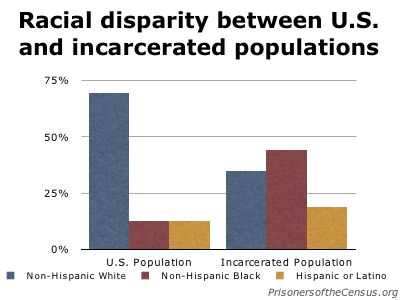
If you'd asked me a few weeks ago if I was racist, I could have responded with a positive "absolutely not". I attended a mixed high school, experience everyday diversity in my neighborhood community, glare at people who tell offensive jokes about any minority, and work at a day care as the only white teacher. With these facts, along with several others, I thought I was in the clear as a politically correct non-racist. After reading Beverly Daniel Tatum's book, Why Are All the Black Kids Sitting Together in the Cafeteria?, I'm having to rethink my statement. Tatum ventured forward the idea that racism is not a personal judgement or opinion against other races or minorities, but is a system of advantage based on race. Tatum would argue that since I am White, I am a part of the privileged race, and am experiencing and perpetuating a racist society that I never took the time to really notice. A great example of this would be views on incarceration. Take a look at the chart below:
 Does this chart shock you at all? Because it didn't shock me, which is disturbing in and of itself. Why would I not be surprised that more Whites were not in jail? There are more Whites in the U.S. than any other group, so the fact that they aren't the most highly incarcerated should be unexpected. I started thinking of the reasons people might use to rationalize these statistics, such as, "Maybe Whites could afford the best lawyers and avoid jail time because they were in a higher economic class. Maybe society views Blacks and Hispanics as more violent because they're portrayed that way through mass media outlets such as the news, reality television shows, and sitcoms. Therefore, juries would be more likely to prosecute them since they assume non-Whites are more violent. Or maybe they have to turn to more crime because they don't have the same education and less legal channels are open to them for success." Every one of those rationales is racist and promotes the idea that in our society, Whites benefit the most. Since I personally have never tried to change this system of incarceration, or any other systems where Whites receive advantages (school, businesses, etc.) Tatum would say that I can be accused of passive racism. This is the equivalent of standing on a people mover. I am not walking forward (toward racism) but am not walking backward or making a stand either. Therefore, I am still passively on the road to racism, like many others, until I better understand the problems and how to overcome them.
This YouTube clip shows 3 White boys vandalizing a car. While several people walk by them, only one person calls the police. They broke into a car and spray painted it for hours while people pointedly looked the other way. In that same park, there were 2 police calls against 3 Black boys sleeping in a car, because the caller said they "looked like they were about to rob something." The park walkers, if asked, might not have seen themselves as racist, but he police calls alone speak for how quick people are to assume the worst of minorities. This is a great example of both passive racism (not calling the cops on the White boys even though they were clearly vandalizing a car), and active racism (assuming the Blacks were going to do something violent, and calling the cops to express those prejudiced beliefs).
The racist beliefs that minorities are less wealthy, more violent, or less educated than Whites is an idea that Tatum explores in her book. She wrote that by saying minorities are "less" or "more" than the norm for Whites indicates that Whites are ideal, and everyone else should strive to be just like them. This is not the case. The whole point of diversity is to understand there is no "norm" groups should try to be. The language used by dominant groups supports their oppression cements their status as privileged and normative. In order to stop victimized groups from internalizing society's views on them, we need to be conscious of passive-seeming statements that actually carry a lot of oppressive weight.
Racism is pervasive, restrictive, and internalized. It is pervasive in that you can find it everywhere in society, including people's personal prejudiced beliefs or actions. An example of its restriction would be a Black child who is told by a substitute that they should only consider community colleges as higher-education possibilities after high school. That child may be restricted from reaching his or her full educational potential at a four-year college or university. Overall, internalization may be the hardest part of racism to overcome. The problem is that not just Whites think Blacks are more violent (as expressed in the YouTube clip), or homophobes think gay men and lesbians are disgusting. It goes deeper, because victims of oppression and racism find themselves believing what society tells them. If a Black child couldn't get the confirmation and support of a family and community at a young age, he might also believe that because of his race he is genetically predisposed to be violent. If he isn't violent, he might still believe Black violence is the "rule", and merely think of himself as the exception. There are also real-life examples of gays and lesbians who have internalized the mainstream idea that being heterosexual is "better". Without the education and "frank talk" that Tatum promotes in her book, we have no way of stopping the negative impacts of racism.
Just as a last thought, Tatum does think that both active and passive racism can be largely prevented. She suggests everyone try to be more conscious of out own actions, and talk with people we can directly impact in our spheres of influence. For my honors class, I am at a point where I can directly impact IHAD children, through actions and things I don't say just as much as through what I do say. This "talk" should not be idle chatter or throwing around random ideas while the other person listens. Tatum says it means"meaningful, productive dialogue that will raise consciousness and leas to effective action and social change." Don't be silent out of fear of sounding naive, offending someone or violating personal boundaries. Look for courage through other people who are already doing it and work with your own strengths. This will start to build the human potential, higher productivity, and lower fears of violence that Tatum believes will come once personal, cultural and institutional racism are vanquished.
This YouTube clip shows 3 White boys vandalizing a car. While several people walk by them, only one person calls the police. They broke into a car and spray painted it for hours while people pointedly looked the other way. In that same park, there were 2 police calls against 3 Black boys sleeping in a car, because the caller said they "looked like they were about to rob something." The park walkers, if asked, might not have seen themselves as racist, but he police calls alone speak for how quick people are to assume the worst of minorities. This is a great example of both passive racism (not calling the cops on the White boys even though they were clearly vandalizing a car), and active racism (assuming the Blacks were going to do something violent, and calling the cops to express those prejudiced beliefs).
The racist beliefs that minorities are less wealthy, more violent, or less educated than Whites is an idea that Tatum explores in her book. She wrote that by saying minorities are "less" or "more" than the norm for Whites indicates that Whites are ideal, and everyone else should strive to be just like them. This is not the case. The whole point of diversity is to understand there is no "norm" groups should try to be. The language used by dominant groups supports their oppression cements their status as privileged and normative. In order to stop victimized groups from internalizing society's views on them, we need to be conscious of passive-seeming statements that actually carry a lot of oppressive weight.
Racism is pervasive, restrictive, and internalized. It is pervasive in that you can find it everywhere in society, including people's personal prejudiced beliefs or actions. An example of its restriction would be a Black child who is told by a substitute that they should only consider community colleges as higher-education possibilities after high school. That child may be restricted from reaching his or her full educational potential at a four-year college or university. Overall, internalization may be the hardest part of racism to overcome. The problem is that not just Whites think Blacks are more violent (as expressed in the YouTube clip), or homophobes think gay men and lesbians are disgusting. It goes deeper, because victims of oppression and racism find themselves believing what society tells them. If a Black child couldn't get the confirmation and support of a family and community at a young age, he might also believe that because of his race he is genetically predisposed to be violent. If he isn't violent, he might still believe Black violence is the "rule", and merely think of himself as the exception. There are also real-life examples of gays and lesbians who have internalized the mainstream idea that being heterosexual is "better". Without the education and "frank talk" that Tatum promotes in her book, we have no way of stopping the negative impacts of racism.
Just as a last thought, Tatum does think that both active and passive racism can be largely prevented. She suggests everyone try to be more conscious of out own actions, and talk with people we can directly impact in our spheres of influence. For my honors class, I am at a point where I can directly impact IHAD children, through actions and things I don't say just as much as through what I do say. This "talk" should not be idle chatter or throwing around random ideas while the other person listens. Tatum says it means"meaningful, productive dialogue that will raise consciousness and leas to effective action and social change." Don't be silent out of fear of sounding naive, offending someone or violating personal boundaries. Look for courage through other people who are already doing it and work with your own strengths. This will start to build the human potential, higher productivity, and lower fears of violence that Tatum believes will come once personal, cultural and institutional racism are vanquished.
Subscribe to:
Posts (Atom)