Are you familiar with the expression "If you don't have anything nice to say, don't say anything at all"? Well that has been my problem this week. I have literally nothing nice to say about this week's reading, yet I still have to blog about it. Please know I am trying my best to avoid a rant.
After reading Paulo Freire's Pedagogy of the Oppressed, I've decided I disagree with almost all of its fundamental elements. I somewhat agree with one main element, which I will later discuss, but I still feel like a mix of his ideas with something else would work better.
“The oppressors do not perceive their monopoly on having more as a privilege which dehumanizes others and themselves. They cannot see that, in the egoistic pursuit of having as a possessing class, they suffocate in their own possessions and no longer are; they merely have.” - Pedagogy of the Oppressed.
Did you immediately understand the above quote? Because at first, I did not. Like most of this book's ideas, I had to read this one several times before I understood what Freire might have been trying to say. Helpful tip: It helps if you read slowly and mouth the words. You'll look like an imbecile, but slowing down may help you understand this book, which perhaps suffers from one-too-many translations. To me, it seemed that if his book was meant to shake up the oppressed, then the language used should have been more accessible to the largely undereducated masses. Ironically, readers confused by Pedagogy's wording are not alone. Freire reported later in life that his language in Pedagogy may have been off-putting to the very readers he wanted to attract. His works after Pedagogy of the Oppressed are supposedly written with a much more conversational and accessible style.
According to Freire there is no grey area or either/or choice to pick from when it comes to oppression. We are either with the oppressed or against them. Since I believe in letting teachers impart their knowledge onto children who can take that knowledge as a fact, I'm probably an oppressor. I believe that teachers have to teach so that their students can create real acts of knowing.
Freire describes our current education system using a banking model where teachers teach and students are taught. He says students are not allowed to contradict or ask questions about what is being taught, and are forced to merely be empty receptacles to be filled with information. This method would be preferred by oppressors and won't ever allow for radical change. In this model, learning is passive.
Freire says students learn "four times four is sixteen; the capital of Para is Belem. The student records, memorizes, and repeats these phrases without perceiving what four times four really means, or realizing the true significance of 'capital' in the affirmation 'the capital of Para is Belem,' that is, what Belem means for Para and what Para means for Brazil." This promotes the idea that knowledge can only grow through invention and reinvention, and that only through "restless, impatient, continuing, hopeful inquiry with the world and with each other" can we ever really learn anything.
According to Freire's thoughts above, memorization can't be true learning. But who the hell could learn their multiplication tables otherwise? And while I agree that discussion should be allowed in the classroom, I also think that the teacher should be able to decide when correct times are for that discussion and resulting questions. Teachers have to teach certain ideas so their students will be prepared for state testing. Tests might be oppressive, but the teachers are not at fault. They don't necessarily have time to answer all questions and follow through children's unrelated tangents. Questions that help understand material are absolutely important, but teachers should be given the power to decide what constitutes as an important discussion and how far to take it. As much as they can, teachers today do try to get to know their students and break down learning so it is appealing and applicable to student life. At least the good teachers anyway.
If students are unsatisfied with their school education, there are other avenues that were not discussed in any part of the book that I noticed. What about learning with friends, parents, or from different communities? Even the kids at IHAD follow this model. Their teachers teach them basic concepts they need for testing, answer any questions pertaining to the information, and other questions if time allows. Then, the students leave school, teach themselves the content and voice their questions to outside help. As far as math, science, and history, I believe this model works pretty well. Student's can learn information from teachers (who DO know more than their students when it comes to the curriculum), ask questions for clarification, and explore their interests further outside of the classroom or for extra assignments like pick-your-own-topic projects. Teachers learning from students and vise versa should be a by-product of a set curriculum that makes sure students are well prepared for life outside of the education system. Additional learning and sharing beyond that can be shared after school hours. With outside learning expected, I don't believe a set curriculum that presents four times four being sixteen as a fact will stifle children's "real learning".
I most agree with Freire's banking model when it comes to creativity in the classroom. Well, what I believe he would've said, since I don't thing it was covered directly. I do think that student's creativity is being stifled in our school systems- from creative arts like theater, choir, band and art all the way up to creative writing and English. Asheville city schools cramming two whole classes into one small art, music, theater, etc. room for only one day a week forces children to learn what they are told, and does indeed stop them from reinventing and personalizing art, and deprives all society or a creativity we could have fostered.
I've made it through the blog without too much of a rant. I believe the book used unnecessarily confusing language and skipped over the facts that teachers are required to teach most information, questioning is usually allowed in school, and not all learning is done in school. Perhaps I missed these points, or this wasn't Freire's intent anyway. It is hard to know, what with of those complicated quotes. I will concede that the book made me realize people have been pushing for more creativity in the classroom decades before our arts budgets were cut, and that this is a serious problem at the forefront of educational reform.
Monday, February 27, 2012

Monday, February 20, 2012
Racism: We are all victims.
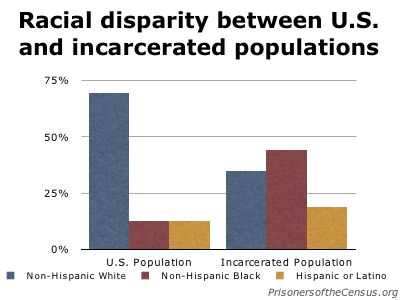
If you'd asked me a few weeks ago if I was racist, I could have responded with a positive "absolutely not". I attended a mixed high school, experience everyday diversity in my neighborhood community, glare at people who tell offensive jokes about any minority, and work at a day care as the only white teacher. With these facts, along with several others, I thought I was in the clear as a politically correct non-racist. After reading Beverly Daniel Tatum's book, Why Are All the Black Kids Sitting Together in the Cafeteria?, I'm having to rethink my statement. Tatum ventured forward the idea that racism is not a personal judgement or opinion against other races or minorities, but is a system of advantage based on race. Tatum would argue that since I am White, I am a part of the privileged race, and am experiencing and perpetuating a racist society that I never took the time to really notice. A great example of this would be views on incarceration. Take a look at the chart below:
 Does this chart shock you at all? Because it didn't shock me, which is disturbing in and of itself. Why would I not be surprised that more Whites were not in jail? There are more Whites in the U.S. than any other group, so the fact that they aren't the most highly incarcerated should be unexpected. I started thinking of the reasons people might use to rationalize these statistics, such as, "Maybe Whites could afford the best lawyers and avoid jail time because they were in a higher economic class. Maybe society views Blacks and Hispanics as more violent because they're portrayed that way through mass media outlets such as the news, reality television shows, and sitcoms. Therefore, juries would be more likely to prosecute them since they assume non-Whites are more violent. Or maybe they have to turn to more crime because they don't have the same education and less legal channels are open to them for success." Every one of those rationales is racist and promotes the idea that in our society, Whites benefit the most. Since I personally have never tried to change this system of incarceration, or any other systems where Whites receive advantages (school, businesses, etc.) Tatum would say that I can be accused of passive racism. This is the equivalent of standing on a people mover. I am not walking forward (toward racism) but am not walking backward or making a stand either. Therefore, I am still passively on the road to racism, like many others, until I better understand the problems and how to overcome them.
This YouTube clip shows 3 White boys vandalizing a car. While several people walk by them, only one person calls the police. They broke into a car and spray painted it for hours while people pointedly looked the other way. In that same park, there were 2 police calls against 3 Black boys sleeping in a car, because the caller said they "looked like they were about to rob something." The park walkers, if asked, might not have seen themselves as racist, but he police calls alone speak for how quick people are to assume the worst of minorities. This is a great example of both passive racism (not calling the cops on the White boys even though they were clearly vandalizing a car), and active racism (assuming the Blacks were going to do something violent, and calling the cops to express those prejudiced beliefs).
The racist beliefs that minorities are less wealthy, more violent, or less educated than Whites is an idea that Tatum explores in her book. She wrote that by saying minorities are "less" or "more" than the norm for Whites indicates that Whites are ideal, and everyone else should strive to be just like them. This is not the case. The whole point of diversity is to understand there is no "norm" groups should try to be. The language used by dominant groups supports their oppression cements their status as privileged and normative. In order to stop victimized groups from internalizing society's views on them, we need to be conscious of passive-seeming statements that actually carry a lot of oppressive weight.
Racism is pervasive, restrictive, and internalized. It is pervasive in that you can find it everywhere in society, including people's personal prejudiced beliefs or actions. An example of its restriction would be a Black child who is told by a substitute that they should only consider community colleges as higher-education possibilities after high school. That child may be restricted from reaching his or her full educational potential at a four-year college or university. Overall, internalization may be the hardest part of racism to overcome. The problem is that not just Whites think Blacks are more violent (as expressed in the YouTube clip), or homophobes think gay men and lesbians are disgusting. It goes deeper, because victims of oppression and racism find themselves believing what society tells them. If a Black child couldn't get the confirmation and support of a family and community at a young age, he might also believe that because of his race he is genetically predisposed to be violent. If he isn't violent, he might still believe Black violence is the "rule", and merely think of himself as the exception. There are also real-life examples of gays and lesbians who have internalized the mainstream idea that being heterosexual is "better". Without the education and "frank talk" that Tatum promotes in her book, we have no way of stopping the negative impacts of racism.
Just as a last thought, Tatum does think that both active and passive racism can be largely prevented. She suggests everyone try to be more conscious of out own actions, and talk with people we can directly impact in our spheres of influence. For my honors class, I am at a point where I can directly impact IHAD children, through actions and things I don't say just as much as through what I do say. This "talk" should not be idle chatter or throwing around random ideas while the other person listens. Tatum says it means"meaningful, productive dialogue that will raise consciousness and leas to effective action and social change." Don't be silent out of fear of sounding naive, offending someone or violating personal boundaries. Look for courage through other people who are already doing it and work with your own strengths. This will start to build the human potential, higher productivity, and lower fears of violence that Tatum believes will come once personal, cultural and institutional racism are vanquished.
This YouTube clip shows 3 White boys vandalizing a car. While several people walk by them, only one person calls the police. They broke into a car and spray painted it for hours while people pointedly looked the other way. In that same park, there were 2 police calls against 3 Black boys sleeping in a car, because the caller said they "looked like they were about to rob something." The park walkers, if asked, might not have seen themselves as racist, but he police calls alone speak for how quick people are to assume the worst of minorities. This is a great example of both passive racism (not calling the cops on the White boys even though they were clearly vandalizing a car), and active racism (assuming the Blacks were going to do something violent, and calling the cops to express those prejudiced beliefs).
The racist beliefs that minorities are less wealthy, more violent, or less educated than Whites is an idea that Tatum explores in her book. She wrote that by saying minorities are "less" or "more" than the norm for Whites indicates that Whites are ideal, and everyone else should strive to be just like them. This is not the case. The whole point of diversity is to understand there is no "norm" groups should try to be. The language used by dominant groups supports their oppression cements their status as privileged and normative. In order to stop victimized groups from internalizing society's views on them, we need to be conscious of passive-seeming statements that actually carry a lot of oppressive weight.
Racism is pervasive, restrictive, and internalized. It is pervasive in that you can find it everywhere in society, including people's personal prejudiced beliefs or actions. An example of its restriction would be a Black child who is told by a substitute that they should only consider community colleges as higher-education possibilities after high school. That child may be restricted from reaching his or her full educational potential at a four-year college or university. Overall, internalization may be the hardest part of racism to overcome. The problem is that not just Whites think Blacks are more violent (as expressed in the YouTube clip), or homophobes think gay men and lesbians are disgusting. It goes deeper, because victims of oppression and racism find themselves believing what society tells them. If a Black child couldn't get the confirmation and support of a family and community at a young age, he might also believe that because of his race he is genetically predisposed to be violent. If he isn't violent, he might still believe Black violence is the "rule", and merely think of himself as the exception. There are also real-life examples of gays and lesbians who have internalized the mainstream idea that being heterosexual is "better". Without the education and "frank talk" that Tatum promotes in her book, we have no way of stopping the negative impacts of racism.
Just as a last thought, Tatum does think that both active and passive racism can be largely prevented. She suggests everyone try to be more conscious of out own actions, and talk with people we can directly impact in our spheres of influence. For my honors class, I am at a point where I can directly impact IHAD children, through actions and things I don't say just as much as through what I do say. This "talk" should not be idle chatter or throwing around random ideas while the other person listens. Tatum says it means"meaningful, productive dialogue that will raise consciousness and leas to effective action and social change." Don't be silent out of fear of sounding naive, offending someone or violating personal boundaries. Look for courage through other people who are already doing it and work with your own strengths. This will start to build the human potential, higher productivity, and lower fears of violence that Tatum believes will come once personal, cultural and institutional racism are vanquished.
Saturday, February 11, 2012
Cosmopolitans should be responsible.
This week my class covered Cosmopolitanism by Kwame Appiah. It was by far the most inspiring book I've read all semester. Cosmopolitanism focused on the idea that all different people from all different cultures are bound by the same common values and humanity. While this book probably won't end wars, ethnic conflict, global warming, or poverty, it did do a great job in making me wonder what my exact place is in a cosmopolitan and globalized world. Appiah's most memorable quote, for me, came at the end of his work: “The people of the richest nations can do better. This is a demand of simple morality. But it is one that will resonate more widely if we make our civilization more cosmopolitan”.
After I read the above quote, I tried to think of a real world example so I could make it a bit more relatable. Since I'm in an african studies class, an example regarding starving children in Tanzania immediately popped into my head.
Let's say there was a young girl who desperately needed food for her starving younger brother, so she went into one of the military bases and stole some of their rations. She knew her actions would never be noticed, much less missed, by her government. If I looked at the girl as an individual I could say something like, "Well, I believe stealing is wrong, but I guess in this circumstance it is allowable for her."I could also pass judgement on whether she is a thief or a hero regarding her actions. Or, I could step up and stop questioning her morals, or comparing them to my own beliefs. I could move beyond the question of whether stealing was right or wrong and look at the bigger picture. This would call for questioning what kind of system Tanzania has that would deny food to a majority of the children in their fishing towns, and whether that was ethical. Looking at the government's (un)ethical decisions on how to provide for their citizens seems more important that looking debating the ethics of a desperate child. After looking at that government, I could look at what me and my country could do to help. The more advantaged countries could take a look at the ethics of a system that lets widespread poverty happen right alongside rich governmental buildings. They could implement loans under the provision that they would be used purely on public welfare, or to create sustainable growing options for the future instead of funding wars.
Plans to help Tanzania would provide a greater humanity to the starving children, and would be a much better use of our time than wondering whether a child's individual actions are justifiable. Cosmopolitanism, whether you agree with the philosophy or not, has the right idea in encouraging well-off countries and people to step up and look at the basic humanity and rights we all deserve.
To help starving children in Africa create sustainable organizations, check out how you can donate in the link below.
http://www.trees4children.org/
After I read the above quote, I tried to think of a real world example so I could make it a bit more relatable. Since I'm in an african studies class, an example regarding starving children in Tanzania immediately popped into my head.
Let's say there was a young girl who desperately needed food for her starving younger brother, so she went into one of the military bases and stole some of their rations. She knew her actions would never be noticed, much less missed, by her government. If I looked at the girl as an individual I could say something like, "Well, I believe stealing is wrong, but I guess in this circumstance it is allowable for her."I could also pass judgement on whether she is a thief or a hero regarding her actions. Or, I could step up and stop questioning her morals, or comparing them to my own beliefs. I could move beyond the question of whether stealing was right or wrong and look at the bigger picture. This would call for questioning what kind of system Tanzania has that would deny food to a majority of the children in their fishing towns, and whether that was ethical. Looking at the government's (un)ethical decisions on how to provide for their citizens seems more important that looking debating the ethics of a desperate child. After looking at that government, I could look at what me and my country could do to help. The more advantaged countries could take a look at the ethics of a system that lets widespread poverty happen right alongside rich governmental buildings. They could implement loans under the provision that they would be used purely on public welfare, or to create sustainable growing options for the future instead of funding wars.
Plans to help Tanzania would provide a greater humanity to the starving children, and would be a much better use of our time than wondering whether a child's individual actions are justifiable. Cosmopolitanism, whether you agree with the philosophy or not, has the right idea in encouraging well-off countries and people to step up and look at the basic humanity and rights we all deserve.
To help starving children in Africa create sustainable organizations, check out how you can donate in the link below.
http://www.trees4children.org/
Friday, February 10, 2012
A splotch of color can be art.


One of these artworks was designed by Piet Mondrian, a famous french abstract painter. It sold for $15,000. The other was created by a disabled student at Metro school in Charlotte, N.C. This artwork hangs up on their school walls and is also featured on their postcards sold during school fundraisers. It can be purchased in postcard size for $1.99.
Anyone familiar with Mondrain would recognize his iconic colored squares immediately in the second picture. However, what if one didn't know who Mondrain was or what his works looked like? Would they instantly be able to tell which painting was "high" art and which one was created by a "disabled" artist? Perhaps not. Both artworks both feature shapes and colors. Could anyone know which one our society deems "better"? Would people acknowledge that huge amounts of effort were put into both artworks and put them on an even playing field? I would certainly hope so.
Even if one could guess the famous piece, what value would they put on the Metro student's work? How much would they be willing to pay for the student's work? $15,000? Not very likely. But more than $2? Most definitely.
I am familiar with Metro's postcard fundraisers because my brother attends the school and actively participates in the artwork. Since his cerebral palsy limits limb movement, his art tends to be splotches of paint on canvas. The only thing he can somewhat control is what color he wants and where wants it. Are his often-misplaced color splotches art? To me, absolutely. Many might argue that art has to have a goal, or convey a message to viewers. But I believe that art just needs to be a mastery of anything. And my brother has mastered his own limited art skills. First he has to consciously work to make at least one of his fingers bend around a paintbrush. Then he puts all of his attention into making sure his arm can dip the brush into the color he wants. Finally he needs to train his muscles to make the short path from the paint to his paper. All for one splotch of color on a piece of paper. This process alone could take him upwards of half an hour for something you or I could do in seconds. There are also some days when his muscles just aren't capable of mastering any of those steps. But he can do it. Instead of giving up and declaring, "I can't do art" like most of us say, he tries over and over again. Eventually, his paper is covered with colors and hanging on Metro's school walls where all of his friends can see it. By that point, you can see his smile from ear to ear literally every time his drives his wheelchair by his painting. He's mastered his art, and overcame more obstacles than I've ever encountered to do so.
I would argue that my brother is an artist. Not a "disabled" artist mind you, but a bona fide artist. The film Arts: the conscious use of skill and creative imagination would concur. This documentary dealt with "disabled" artists, the political correctness that leads to such terms, and what "art" actually means. Similar to my standpoint, they argued that a mastery of absolutely anything can be considered art- including everything from painting the Sistine chapel to learning how to perfectly tie your shoelaces.
Whether people appreciate your art or not should be irrelevant, it should be something you have worked on, mastered, and love. No matter if it is sold for thousands of dollars or hanging up on your refrigerator, it is still worthwhile art. This runs true for both disabled and "regular" artists. And your world will still be enriched for having completed it.
Something that worries me is that art once deemed "bad" can be lauded and sold once people know it was created by someone with a disability. Why are new venues opened if the artist has, for example, autism? Does society pity them? Or are they more respected for accomplishing their art in spite of mental or physical handicaps? I tend to think it is the former. For example, if someone saw my brother's work and I told them it was done by a 17-year-old, they would most likely think it was terrible. If I told them his circumstances, they would suddenly say something like, "Oh it is beautiful." Is it though? They should respect the amount of work that he put in it and what it represents to him, not suddenly change their mind and comment merely on its aesthetic appeal. Art may be relative, but hard work and mastery aren't. Hopefully, more people can be as open-minded as the Arts documentarians were and see that there is a lot more to be said for art than high-selling profits and subjective beauty.
Whether people appreciate your art or not should be irrelevant, it should be something you have worked on, mastered, and love. No matter if it is sold for thousands of dollars or hanging up on your refrigerator, it is still worthwhile art. This runs true for both disabled and "regular" artists. And your world will still be enriched for having completed it.
Something that worries me is that art once deemed "bad" can be lauded and sold once people know it was created by someone with a disability. Why are new venues opened if the artist has, for example, autism? Does society pity them? Or are they more respected for accomplishing their art in spite of mental or physical handicaps? I tend to think it is the former. For example, if someone saw my brother's work and I told them it was done by a 17-year-old, they would most likely think it was terrible. If I told them his circumstances, they would suddenly say something like, "Oh it is beautiful." Is it though? They should respect the amount of work that he put in it and what it represents to him, not suddenly change their mind and comment merely on its aesthetic appeal. Art may be relative, but hard work and mastery aren't. Hopefully, more people can be as open-minded as the Arts documentarians were and see that there is a lot more to be said for art than high-selling profits and subjective beauty.
Thursday, February 2, 2012
In Martha Nussbaum's new book, Creating Capabilities: The Human Development Approach, she writes of the necessity to look beyond measuring a country by its Gross Domestic Product (GDP) that refers to the market value of all financial goods and services produced within a country in a given period. Mostly she explained this approach could not work because of a lack of equal distribution. Instead, Nussbaum pushed the idea of measuring a country instead by its Human Development Index (HDI), which looks at a broader range of "human capabilities"such as individuals' education, health, etc. For a more in-depth discussion of GDP v GDI pros and cons, check out http://www.nationmaster.com/article/Gross-Domestic-Product-vs-Human-Development-Index
In looking at the chart below, one can better understand Nussbaum's argument that simply because a country has a high GDP does not guarantee that all of its citizens are reaching their full capabilities. Quite often, as in China, the countries high on the GDP listing don't even make the top 10 of HDI lists.

Creating Capabilities broke down human capabilities into 10 major groups: life, bodily health, bodily integrity, senses, imagination and though, emotions, practical reasons, other species, play and control over one's environment (both political and material).
Nassbaum's book focused on the idea that we should all have opportunities to reach each of our individual capabilities, though achieving those capabilities is not necessary. For example, she argued that the state should protect a human's right to basic daily nourishment. However, if an individual chose to fast, for whatever religious of moral reasons, her argument would be they should be allowed that right as well, as a matter of personal choice. There's a difference between being forced to starve due to lack of food and choosing to fast out of personal reasons. This said, the state should not have the right to impose moral or religious practices of fasting on the people, because that would be harming their capabilities for both bodily heath and life. From her book I gleaned that the state should not be allowed to tell us how to live our lives, but should take the funds it has and do everything it can to protect our opportunities to follow our own choices. The state needs to give us the tool, we can in turn decide whether to use that tool to fulfill our needs or not. More often than not, these tools are going to require the state to dig deep into their spending pockets.

While I appreciated Nussbaum's ideas and whole-heartedly agreed with almost everything she put forward, she lost me a bit when she explained her take on education. She stated in Creating Capabilities that she believed the state should play a bigger role in providing education for both children and adults to develop their capacities to learn ideas such as logical reasoning, creativity, debate, and how to contribute to one's community. Got it.
If applied to IHAD, we could say that instead surviving off of private funding, the program should be funded by taxpayer dollars. If the dreamers' schools alone could not provide them with the tools of education needed to fulfill all 10 of their human capabilities, then Nussbaum's theory seems to suggest the state make this program outside of the school systems picks up the slack. To take it one step further, there should be hundreds of other state-sponsored programs to educate people on how to fully explore all of their capabilities. Whether or not a state could afford such programs could play a part in determining its HDI.
Here's where I get confused. If I read it correctly, her book disagreed with the idea that some forms of art or beauty could be of a "better" or "higher" level than others'. She also stated there is no way of saying how one person's happiness or level of satisfaction with their achievable capabilities could be compared to another person's.
Did she not just argue that people of all ages should receive more state-funded education to learn that there some lifestyles and levels of happiness are higher than others? That people should strive to both find and achieve higher levels of happiness and capabilities than they previously knew they possessed? Shouldn't the state be teaching what is "good"? If the state did not teach that some forms of life are better than others, how are Nussbaum's ideas of increasing people's propensity for debate and creativity going to take place? If the state was not required to teach which ideas of beauty, happiness and justice were important, how would her approach be any different than the education that is currently being provided? The masses would still remain largely ignorant of the "bigger and better" lifestyle opportunities they were missing out on.
To fix this contradiction, what if the state was required to teach all different models of beauty, happiness, and life choices? Then people could receive all of their opportunities, and could have the choice to decide which paths, if any, they wanted to follow to reach their human capabilities. My parents applied that methodology to me, and I plan on using it to encourage the children I tutor. You want to be a doctor? Great! A hairdresser? Fantastic. As long as children (and adults) know they have the option and ability to do or have what they want, I can assume Nussbaum's theory about the state helping people realize their capabilities would in fact be a great idea to strive for.
Subscribe to:
Posts (Atom)